Thursday, March 14, 2024

Women's History Month 2024: The Red Book Revisited

Here's a book that is easily overlooked because of its age but is a must-have for American genealogical research. Even if you don't own it, bookmark where it is found online (see below).


Title: Ancestry's Red Book: American State, County, and Town Sources

Author:  Alice Eichholz, Ph.D., CG


Available online at the RootsWeb Wiki


Synopsis: 

"Red Book is designed to help family historians learn where to find information about their ancestors by taking an approach focused on localities. It is an expansive guide to the most useful resources in each of the fifty United States and the District of Columbia. Organized by state, the content easily directs the user to information-rich resources in areas including:

  • Vital Records
  • Census Records
  • Internet Resources
  • County Resources
  • Background Sources
  • Land Records
  • Probate Records
  • Court Records
  • Tax Records
  • Cemetery Records
  • Church Records
  • Military Records
  • Periodicals, Newspapers, and Manuscript Collections
  • Archives, Libraries, and Societies

Major highlights of the content are the county resources published in table format for each state. Information in these tables often includes county name, when the county was formed, which counties the new county was created from, and dates for when each county started recording information such as birth, marriage, and death records or land, probate, and court records. Each state also has a county, town, or parish map."


Why You Need This Book: First, published in 1989 it is easy to ignore this valuable book. I highly recommend you bookmark the RootsWeb wiki page where you can find this work. Click on your state of interest. Now check out the various pages associated with that state including "county resources." This provides a chart of each county and when different types of records started in that county (if applicable). Yes, some must-have genealogy books are older. But the information they provide can be timeless. Don't use this book to find the address for the county seat, instead use it for the information it provides about when records began.


Original Source:

Women's History Month 2022: Red Book


Wednesday, March 13, 2024

Women's History Month 2024: FamilySearch

 For today, let's discuss the resource you need for your research.  

FamilySearch should be one of the first websites you exhaust. Start with the FamilySearch Research Wiki. You can either search by the state name and the type of record, or you can search by the state name and then click on the link in the Record Types box.


You can also look in the FamilySearch Catalog. Conduct a Place search and then scroll down the available Subjects for potential records.

Finally, remember to search the FamilySearch Digital Library, which includes digitized books from both the FamilySearch Library and partnering institutions. 


Is FamilySearch the only place to find records? No, make sure to check other online resources, including genealogy websites (free and fee-based), state libraries, archives, and digitized book websites.


Women's History Month 2020: Resources-FamilySearch


Tuesday, March 12, 2024

Women's History Month 2024: WWI Groups and Organizations


War means that everyone needs to pitch in. This is especially true when we look at World Wars I and II. Women were asked to help, and they answered the call. We find records of their involvement in the organizations they belonged to in archives and published histories. 

Look in the histories and directories of your ancestor's hometown and see if these groups were part of her community. Maybe she was a member?

  • Society of Colonial Dames
  • Navy Comforts Committee
  • Young Women's Christian Association
  • Centennial Club
  • Housewives League
  • Federation of Women's Clubs
  • Army Comfort League
  • American Red Cross
  • National League for Women's Service
  • Girls' Patriotic League (National League for Women's Service)
  • Women's Committee, Council of National Defense
  • Kiwanis Club
  • Fatherless Children of France Society
  • Liberty Loan Campaign
  • Daughters of the American Revolution
  • United Daughters of the Confederacy
  • Council of Jewish Women
  • The Ladies' Heritage Association
  • Salvation Army
  • Equal Suffrage Association
  • Council of Catholic Women
  • Circle of King's Daughters
  • Independent Daughters of  Confederacy
  • Women's Christian Temperance Union
  • American Legion Auxiliary


What groups were your female ancestors a member of?

Consider that multiple generations of women may have belonged to the same group.

What home sources (photos, correspondence, ephemera, memorabilia, jewelry) suggest membership in a group or organization?


Original Source:

Women's History Month 2017: Groups and Organizations


Sunday, March 10, 2024

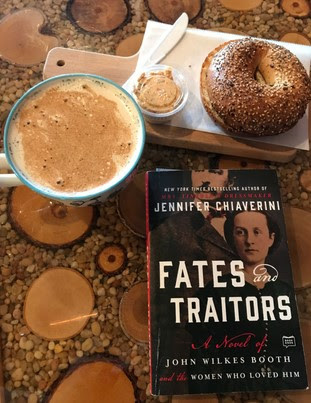
Women's History Month 2024: Fates and Traitors Revisited

Historical fiction can help give us ideas about telling our own female ancestor's story. The following is one of my favorites.


Title: Fates and Traitors: A Novel of John Wilkes Booth and the Women Who Loved Him.

Author: Jennifer Chiaverini

Publisher: Dutton

Synopsis: "The subject of more than a century of scholarship, speculation, and even obsession, Booth is often portrayed as a shadowy figure, a violent loner whose single murderous act made him the most hated man in America. Lost to history until now is the story of the four women whom he loved and who loved him in return: Mary Ann, the steadfast matriarch of the Booth family; Asia, his loyal sister and confidante; Lucy Lambert Hale, the senator’s daughter who adored Booth yet tragically misunderstood the intensity of his wrath; and Mary Surratt, the Confederate widow entrusted with the secrets of his vengeful plot." (author's website)


Why You Need This Book: I like the idea of telling the story of John Wilkes Booth through the women around him (mother, sister, girlfriend, and co-conspirator). Thinking about genealogy, consider how to write a narrative about a female ancestor through the lives of those around them. I think this is a unique way to tell a story and could also work for genealogy. OR you could write the story of your ancestors as a historical fiction piece and explore the time period they lived in. 

Women's History Month 2022: Fates and Traitors

Saturday, March 09, 2024

Women's History Month 2024: Directories

Back in 2019, my theme for Women's History Month was "I'm in the Book." I used that month to illustrate the different types of directories that include women's names. Directories and personal telephone books are typically a home source you might come across after someone has passed. It might seem like the type of ephemera that should be thrown away. However, directories can provide some insight into her life.


Take, for instance, this example of a National Roster of the Ladies of the Grand Army of the Republic (1933-1934). This directory lists names, affiliations, and addresses of women who held leadership positions in the LGAR. It also includes national groups like the Grand Army of the Republic and the Women's Relief Corps. What this directory is not is an every-person member list.

This is a directory that the owner may not be named in, so what good is it? Just having it suggests she was a member of the LGAR. That suggests that she had a family member (a blood relation) who was a Union soldier, sailor, marine, or nurse. Their website states membership in LGAR is for:

"All female blood relatives, ten (10) years of age or over, of honorably discharged Union Soldiers, Sailors and Marines of the Civil War, 1861 to 1865, also ex-army nurses of that War, are eligible for membership" (http://www.lgarnational.org/Membership.html)

Owning this directory (and if she lived during those dates) suggests she (or a family member) was a member. I would take that and determine what records exist for her membership and look into a soldier, sailor, marine, or ex-army nurse who was related to her.

We must go beyond what they include when we find directories and ask questions. These questions can include:

  • Who is included in this directory?
  • Who is absent?
  • What can I learn about this group?
  • Could my ancestor have been a member?
  • Do I have any other home sources that include this group?


Original Source:Women's History Month 2023: Directories


Friday, March 08, 2024

Women's History Month 2024: Maiden Names Revisited


From the collection of Gena Philibert-Ortega

What's her maiden name?!

Probably the most common question family history researchers ask is, "How do I find her maiden name?"

It's an essential question since you can't connect her to her parents without that information. She becomes one of the endless women relegated to being referred to as "unknown."

What are some sources that can help reveal her maiden name? Here are a few to think about:

  • Marriage Records
  • Child’s Birth Records
  • Death Records (hers and perhaps her children's)
  • Church Records (baptisms, christening, marriage, membership record)
  • School Records
  • Newspaper Articles (about her marriage or the obituary of a sibling or parent)
  • Wills
  • Military Pension Record for Husband
  • Family Bible
  • Manuscript Collection (diaries, journals, correspondence from those in her community)
  • Compilations like the Barbour Collection, the Draper Manuscripts, and Women in the Western Reserve.


Original Source:

Women's History Month 2015: What was her Maiden Name?


Thursday, March 07, 2024

Women's History Month 2024: Keywords Revisited


Image by Willi Heidelbach from Pixabay

It's time to add a technique to your search. As genealogists, we are taught to fill those search engine boxes with our ancestors' names, birth/marriage/death dates, and places. That's great. We should do that because the information we are searching for on genealogy websites is indexed or transcribed, and the search engine is programmed to find that information.

But when we search library and archive catalogs for content, we need to look beyond the individual ancestors' names and dates.

We need to have a keyword list.

So, what's on a keyword list? Think about a word or words that describe her life. Such as:

  • Her religion
  • Organizations she belonged to (religious, benevolent, political, auxiliaries to husband's membership group)
  • Various names of locations  she lived (might be several for the same place. Example: Independence, California; Owens Valley; Inyo County; Eastern Sierra)
  • Schools she attended

Use keywords in the library or archival catalogs to find materials for the groups and activities she participated in. Materials in these repositories are not cataloged by the name of everyone mentioned in the record. You are much better off searching by a place. Remember, in searching for documents for her, we may need to cast a wider net beyond genealogy favorites like censuses and vital records. 

Can you use keywords on genealogy websites? Yes. Ancestry.com has a field in their search engine for a keyword. Digitized newspaper and book websites use keyword searching. To help you craft better searches for digitized newspapers, check out this GenealogyBank blog article I wrote entitled Genealogy Search Engine Types & Tips: OCR vs. Indexed Databases


Original Source:

Women's History Month 2016: Tip #5 Keyword List


Wednesday, March 06, 2024

Women's History Month 2024: Name Variations Revisited

Photo by Gena Philibert-Ortega


What was her name?


That may seem like a stupid question, but I want you to really consider your ancestor's name.

Was her name the very popular Elizabeth? Or was it Liz, Beth, Betty or some other variation? If she married, her name would most likely change. She went by Elizabeth Smith, and then her marriage made her Elizabeth Reynolds or Mrs. G.K. Reynolds.


What was her name?

Don't get into the rut of assuming her name was always just Elizabeth. That's when you miss mentions of her life in records.

Create a list of her name variations. Consider all variations incorporating initials (both her and her husband's), middle names, and her husband's name variations. Your list might look something like this:


Elizabeth Grace Smith        Elizabeth Grace Reynolds

Elizabeth G. Smith              Elizabeth G. Reynolds

E. Grace Smith                    Mrs. G.K. Reynolds

Liz Smith                            Mrs. George K. Reynolds

E.G. Smith                          Mrs. Liz Reynolds            

Miss Smith


Now, add all the possible misspellings to that list. Not sure what those could be? A child or even a teenager might be a good person to ask. They will sound it out and guess the spelling.

Why is all of this important? Your ancestor's name is not spelled or indexed correctly in every record. And they or the person providing their name may not have referred to them with the same name as you are typing in that search engine.

Keep this list near your research and use it every time you search. Don't risk not finding something important because you were searching the wrong version of her name.


Source:

Women's History Month 2016: Tip #6 Name Variations


Tuesday, March 05, 2024

Women's History Month 2024: Scrapbooks Revisited

 I love old scrapbooks. How I envy those who are gifted with an ancestor who scrapbooked. Victorians loved scrapbooking and pasted images, memorabilia, recipes, and newspaper clippings in their books. These were books meant to be kept and looked at over and over again. Children and adults were encouraged to use scrapbooks, and images were available to them marketed specifically for scrapbooks. There was even an adhesive scrapbook developed by Samuel Clemens, better known as Mark Twain (yes, he did more than write books).


From the collection of Gena Philibert-Ortega


Scrapbooks can contain newspaper clippings, papers with genealogical value, photographs, and written memories. Now, I know what you're thinking. "I don't have a scrapbook from my ancestor." I don't either. But that's where the FAN club comes in. Remember, FAN is short for Friends, Associates, and Neighbors, and in women's research, expanding your search to include those people is vital. You can find treasures in the scrapbook of a neighbor, friend, associated family member, or an organization. I remember going to a Texas historical society and paging through the scrapbook of a local woman who cut out newspaper articles about local families, including obituaries. This record that was not indexed or digitized was a goldmine of information for those conducting local family history research. But don't forget that membership groups kept scrapbooks that document members. There are also other scrapbook-type records, such as autographs and birthday books.

How do you find a scrapbook that may mention your female ancestor? Scrapbooks can be found in archival collections. One place to find an archival collection is ArchiveGrid. I recommend searching by the location where your ancestor lived. If she was a member of an organization, try searching for that name as well.

Another example of a place to look is the Digital Public Library of America. A search using the keyword "scrapbook"  brought up over 49,000 digitized results. (an increase of over 23,000 items since the first time this article was posted in 2018)

Yes, research isn't always indexed, online, or found by an ancestor's name. But the riches that can be found in scrapbooks can be wonderful.


Resources

Tucker, Susan. The Scrapbook in American Life. Philadelphia: Temple Univ. Press, 2006.

Garvey, Ellen G. Writing with Scissors: American Scrapbooks from the Civil War to the Harlem Renaissance. New York: Oxford University Press, 2012.


Original Source:

Women's History Month 2018: Scrapbooks


Monday, March 04, 2024

Women's History Month 2024: Museums Revisited


Genealogical research. Family History research. The first term conjures up names, dates, and places. The study of a direct line of descent. The other makes us think of information that fills in the blanks of our ancestral timeline. Museums are a repository that can provide both. They can provide a place to learn about an ancestor's name, date, and place but they also provide the social history between a birth and death date.


Women Museum of California. Photo by Gena Philibert-Ortega


What are we looking for when researching our female ancestors at a museum?

Social History: Images, exhibits, and material culture (stuff) that educate us about the history and the everyday lives of our ancestors.

Names: Names of a community's residents, donors to the museum, "famous" people,  staff and volunteers, authors, and researchers.

Local History: The history of a time and place. What was going on that impacted our ancestors' lives or was happening while they were alive in that time and place?

Time and Place: What about that time and place? What can we learn about it that impacts our understanding and research into an ancestor's life?

We need to approach our research at a museum with two goals:

1. Do they have anything that includes names and dates that might place my ancestor in this location, at this time? and 

2. What can this museum provide me that will help me better understand my ancestor's life (time and place)?


Katherine Scott Sturdevant writes in her book, Bringing Your Family History to Life Through Social History that "Social history is the best tool for reconstructing your ancestor's entire world." There are many sources that help us with social history but the museum is best known for reconstructing a "world" {pg 8}whether that is a community, an occupation, or a historical event. Sturdevant goes on to write "your ancestors were not unique" {pg 10} which is a reason why the museum is a great place to learn more about their lives. The museum recreates that community's common experience.


Resources

Sturdevant, Katherine Scott. Bringing Your Family History to Life Through Social History (Betterway Books, 2000).


*Originally posted:  Women's History Month 2021: Why Museums


Sunday, March 03, 2024

Women's History Month 2024: Women of the Northern Plains Revisited


Title: Women of the Northern Plains: Gender & Settlement on the Homestead Frontier 1870-1930

Author:  Barbara Handy-Marchello

Publisher: Minnesota Historical Society Press


Synopsis: 

"In Women of the Northern Plains, Barbara Handy-Marchello tells the stories of the unsung heroes of North Dakota's settlement era: the farm women. As the men struggled to raise and sell wheat, the women focused on barnyard labor--raising chickens and cows and selling eggs and butter--to feed and clothe their families and maintain their households through booms and busts. Handy-Marchello details the hopes and fears, the challenges and successes of these women--from the Great Dakota Boom of the 1870s and '80s to the impending depression and drought of the 1930s. Women of the frontier willingly faced drudgery and loneliness, cramped and unconventional living quarters, the threat of prairie fires and fierce blizzards, and the isolation of homesteads located miles from the nearest neighbor. Despite these daunting realities, Dakota farm women cultivated communities among their distant neighbors, shared food and shelter with travelers, developed varied income sources, and raised large families, always keeping in sight the ultimate goal: to provide the next generation with rich, workable land. Enlivened by interviews with pioneer families as well as diaries, memoirs, and other primary sources, Women of the Plains uncovers the significant and changing roles of Dakota farm women who were true partners to their husbands, their efforts marking the difference between success and failure for their families." (Project Muse)

Why You Need This Book: 

"She was just a farmer's wife." Please. Don't say that. Learn what life was like for that time and location for farmer's wives. There are a number of academic press-type books that study this. Farmer's and farmer's wives lives can be studied and shouldn't be discounted so quickly. This is one book that can help. This book's chapters look at marriage and family, work, butter and egg production.


*Originally posted: Women's History Month 2022: Women of the Northern Plains


Saturday, March 02, 2024

Women's History Month 2024: Delayed Birth Certificates Revisited

Need to verify a birth date? Get a birth certificate! But it's not always that easy. Birth certificates weren't always the way Americans recorded births. Before the early 20th century, the family Bible was the record of choice for many births.

As the 20th century marches on, it becomes necessary to show proof of age and citizenship for activities such as registering for school, applying for a marriage certificate,  government work during wartime, and applying for Social Security. Bible documentation was ephemeral. Only one person can "own" the Bible, which can be easily destroyed due to catastrophic events. It also isn't an "official" record.

The Census Bureau and Public Health Departments worked on standardizing birth certificates and solving the problem of documenting a person's birth and relationship to their parents, which eventually resulted in the widespread use of government-issued birth certificates.

So, how do you "prove" age when a birth was not recorded? That's where a Delayed Birth Certificate comes in.

Delayed Birth Certificates asked for affidavits from those who knew best when the person was born. Family, an attending physician or midwife, a neighbor or friend provided information about the birth or the age of the person. Other "proofs" could include government documents, the family Bible, and, in the following example, a DAR application.


Courtesy of Houston County, TN Archives


For more examples of delayed birth certificates or to find what's available via the FamilySearch Catalog.


Ultimately, the issuance of birth certificates was vital for identification. 

The enormity of the delayed registration problem can be better visualized from the fact that there were in 1940 about 54 million people in the United States without birth certificates on file during the first year of life. Although the pressure on the State bureaus of vital statistics was relived somewhat by WPA aid in the searches of birth certificates, the situation is still critical. It is difficult to determine what effect the disruption of the regular functions of the State vital statistics offices will have on the quality and completeness of national vital statics, or to predict the course of the delayed birth registration problem in the future.*


Resources

GenealogyBank Blog - Genealogy 101 #9 Birth Certificate Alternatives

"From Family Bibles to Birth Certificates. Young People, Proof of Age, and American Political Cultures, 1820-1915" by Shane Landrum in Age in America: The Colonial Era to the Present. Edited by Corinne T. Field and Nicholas L. Syrett. New York: New York University Press (2015).

Pearson, Susan, The Birth Certificate : An American History. University of North Carolina Press 2021.


Sources

*Vital Statistics-Special Reports. Oklahoma Summary of Vital Statistics 1940. page 1261. Available via GoogleBooks.

Originally posted as Women's History Month 2018 Delayed Birth Certificates 

Friday, March 01, 2024

Welcome to Women's History Month 2024


It's March 2024, which means it's Women's History Month. This is the time of the year that I post a resource or a tip each day to help you research your female ancestors and other historical women.

I missed an important anniversary last year. 2023 marked 10 years of Women's History Month posts on Gena's Genealogy. Each year has focused on a new theme and new ideas to help you with your research. So this year, on the 11th anniversary of these posts, I decided the theme will be Women's History Month Revisited. I'm going to bring you a "blast from the past." I'll select one past tip or resource each day. In some cases, that post will include new information to consider, so it won't just be a tired rerun. Unfortunately, blog posts get lost over time, so I figured this was a good way to bring to your attention some of the information I think is must for the researcher. 

See you tomorrow for our first Women's History Month resource for 2024!

Friday, March 31, 2023

Women's History Month 2023: Her Doilies

One thing that I and others associate with grandmas is various types of crocheted, knitted, and tatted items. Doilies. 

From the collection of Gena Philibert-Ortega


Doilies can be found on tables, chair arms, the back of chairs, and really anywhere that needs a little decoration.  Doilies can be one solid color, or they can have various colors like the one pictured.

I decided to end Women's History Month with something simple, doilies. Too often, we don't spend time telling the story of our female ancestors because the genealogically-relevant records seem to be missing. But the items we need to tell her story are all around us, we just need to look.

Thursday, March 30, 2023

Women's History Month 2023: Her Ring

 Rings can be beautiful, but they can also have meaning. We discussed wedding rings earlier in the week but what about other types of rings? For example, a class ring might be symbolic and provide information about where and when she graduated. What about other organizations? What was she a member of?


Photo by Gary W Clark, PhotoTree.com. Used with permission.


This example is from the Daughters of Rebekah. Founded in 1851, the Rebekahs were an all-white fraternal auxiliary of the International Order of Oddfellows. Members were originally the wives and daughters of male IOOF members. Today, both men and women can be members of the Rebekahs and do not have to be related to a male member of the IOOF. Rebekahs is still a branch of IOOF but it is also a service organization. 

If you Google the words Daughters of Rebekah Ring, you'll see other examples of rings with the images of a three-link chain, dove, lily, moon, and seven stars. 

Jewelry might be something she purchased or was gifted to show her pride in her membership, a level or membership, or service. A look in her jewelry box or a photo of her might reveal a piece of jewelry that has a symbol, letters, or looks to be different than other pieces. That jewelry might help to tell her story. 

Wednesday, March 29, 2023

Women's History Month 2023: Her Charm Bracelet

Did your ancestor own a charm bracelet? Charm bracelets have been around since about 400 BCE, but it was during the reign of Queen Victoria, who wore charms, that they became popular. 

There are various types of charm bracelets depending on the fashion sense and sentimentality of the wearer. You may buy charms based on where you visit. Charms can signify important events in your life. Sweetheart charm bracelets during World War II were given by GI's to their girlfriends or other women in their life. The receiver may have collected charms from Europe to coincide with where he had been.


Do you wear a charm bracelet? When I was young, I had one purchased at Disneyland. Later I Inherited a charm bracelet from my grandmother. One charm bracelet I own is from the 1940s-1950s and is a biography of the original owner with charms that include what she experienced, where she traveled, and what she loved.

Did your female ancestor own a charm bracelet? What charms did she have? Did she buy those charms, or did someone else in the family? What does her charm bracelet say about her? Charm bracelets are biographical and can be a great prompt to use to write about her life.

Tuesday, March 28, 2023

Women's History Month: Her Wedding Ring

Was the woman you're researching married? Have you thought about her wedding ring?

Image by Arek Socha from Pixabay 


The Gemological Institute of America writes on its blog that rings were first designed by the Egyptians. They used rings to represent eternity. Wedding rings start to evolve in the Middle Ages and include gemstones and interlocking bands.

According to GIA, wedding rings weren't the only thing exchanged by a couple. In colonial America, where the Puritans saw rings as frivolous, husbands gave their wives a practical gift, a thimble. Some women cut off the top of the thimble, which then could transform the thimble into a ring. 

So when did women start wearing diamond wedding rings? GIA says there are writings dating to the 15th century that mention diamond wedding rings.

What type of wedding ring did your mom, grandmother or great-grandmother own? Did she wear a simple band or did she have a ring with a diamond or other gemstone? Did she have an engagement ring? Did she wear both rings regularly? Have you looked in catalogs or online to learn more about that ring?

Monday, March 27, 2023

Women's History Month 2023: Her Jewelry Box

Where did your mother and grandmother keep their jewelry? 

Even women who lived simple lives may have had a few pieces of jewelry that were given to them or that they inherited. 

From the collection of Gena Philibert-Ortega


Jewelry boxes have been around for centuries and provide jewels a place to be kept safe and clean. With the Industrial Revolution and later mail-order catalogs, jewelry boxes were easily available to women and could be made from any number of materials, such as metal.

What jewelry boxes did your mother or grandmother have? Do you remember what they held? Sometimes jewelry boxes have other important items stored within. Did you inherit a jewelry box?

Sunday, March 26, 2023

Women's History Month: Her Coin Purse

As we finish talking about the contents of a purse, I thought we should touch upon coin purses. 

It seems like when I was younger, anytime you traveled, there were souvenir coin purses of some sort. In a time when we carried cash money, it made sense to carry something that would hold it all. A Wikipedia article claims that coin purses have been around since about 3300 BCE. As long as there have been coins, people have needed a way to keep them together.

Wikimedia Commons


When you start considering coin purses as a piece of our female ancestor's material culture, you see photos and histories of them everywhere. This 19th-century example from The Met is knitted and includes the maker's name. This Mother of Pearl version is proof that coin purses could be made from almost any material. 

What was in your female ancestor's purse? Did you inherit any of it? What do you remember?

Saturday, March 25, 2023

Women's History Month 2023: Her Lipstick

Yesterday we looked at her purse. That got me thinking about what was in her purse. One item that might be found was lipstick.

Image by annca from Pixabay 


Lipstick has a long history starting about 3500 BCE. At times, it was used by both men and women. Lipstick has also had a problematic history with the poisonous ingredients it contained and the negative judgments on women who wore it. 

Lipstick has gone in and out of fashion, but in the 20th century, American suffragists started wearing lipstick as a sign of emancipation, according to this JSTOR article on Lipstick's Complex History

An online search reveals what colors were popular during the decades of the 20th century. This might help to better understand what she might have worn. Vintage cosmetic company Besame sells lipsticks in shades that were popular during years spanning the 1920s to the 1970s. 

I remember that my paternal grandmother had numerous Estee Lauder lipstick tubes on her dressing table. If I remember correctly, they were mostly shades of red. What did your grandmother wear?